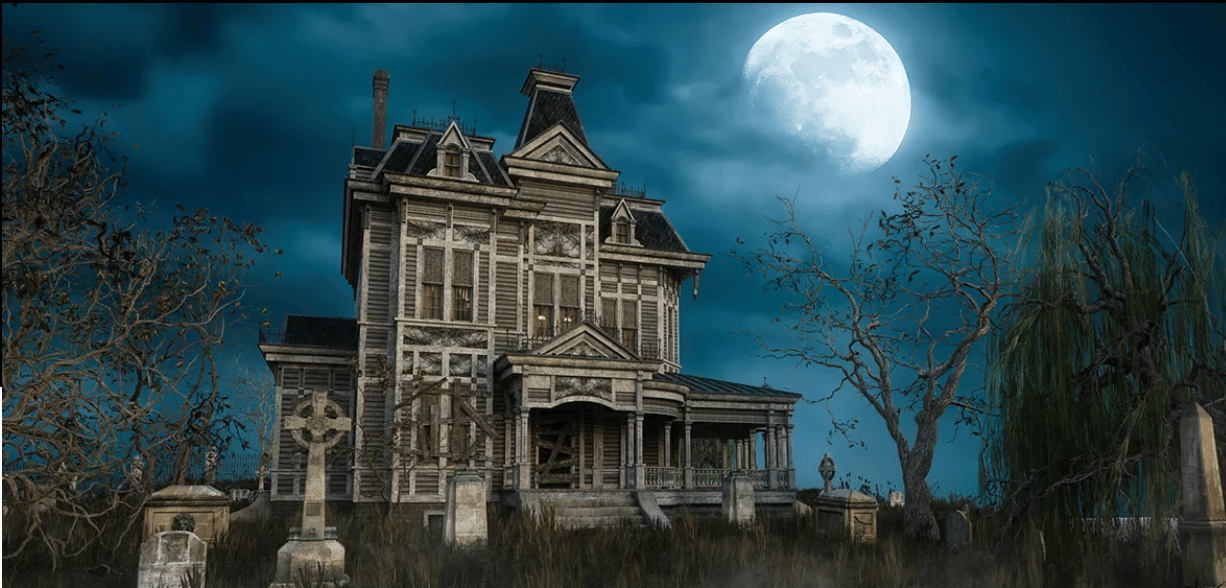
Do You Need To Disclose If A House Is Haunted?
Tim & Angie Todd October 29, 2026
Tim & Angie Todd October 29, 2026
Do You Need To Disclose If A House Is Haunted?
As Halloween approaches, there's a spooky question haunting the real estate market: Are sellers and agents required to disclose if a property is haunted when selling a house?
California law has no direct mention of paranormal activity when it comes to selling a house, however, the law requires California residents to disclose any death that's occurred on the property, according to the California Association of Realtors.
Are There Any Exceptions To The Law?
There is one exception to the California Realtor law. According to the California Association of Realtors, if a person died due to HIV or AIDS then the information doesn't need to be disclosed to the buyer. The law was meant to protect against stigmatization and discrimination, the Los Angeles Times reported in 1990.
Disclosure laws differ from state to state. Most states only require sellers to make certain disclosures about the property's condition or "physical defects" such as black mold or a leaky roof. In some states however, sellers must disclose "emotional defects," or what realtors refer to as stigmatized properties. As stigmatized property is a property that is less desirable because of emotional defects such as death of an occupant, murder, suicide, if methamphetamines were produced there, or believe that a house is haunted.
Nine states have laws around the disclosure of a death on the property. In Alaska, a death within one year must be disclosed, and in South Dakota, sellers must disclose a homicide on the property. In Connecticut, Delaware, Georgia, New Hampshire, New Jersey and South Carolina, sellers must disclose a death on the property only if asked.
Four states specifically mention paranormal activity in their real estate disclosure laws: New York, New Jersey, Massachusetts and Minnesota. The laws in Minnesota and Massachusetts state it is unnecessary to disclose if the house is haunted by paranormal activity or the supernatural. In New Jersey, a seller must truthfully tell a buyer if their property come with departed roommates, but only if asked. In the famous 1991 New York case of Stambovsky v. Ackley (commonly known as the "Ghostbusters" ruling), a buyer sued the seller and the seller's Realtor for failure to disclose the house's ghostly reputation. Prior to putting the house up for sale, the home had both the notoriety and the media coverage, but the out of town buyers were unaware of the home's history. Although the court did not rule nondisclosure of the house's reputation as fraudulent, it did allow the buyer to back out of his contract and get his downpayment back. New York State declared that sellers must disclose to buyers that they think a house is haunted only of they have already shared this opinion "to the public at large." But as long as they keep their supernatural encounters to themselves, they're under no obligation to speak up when it's time to sell the home.
Most states, however, follow the contract doctrine of caveat emptor, or "buyer beware," meaning that buyers are on their own if their purchase is not what was expected. Buyers should be sure to check local disclosure laws and ask their Realtor plenty of questions, as agents and sellers are obligated to be truthful.
Stay up to date on the latest real estate trends.








Get assistance in determining current property value, crafting a competitive offer, writing and negotiating a contract, and much more. Contact us today.