Carmel Valley Mello-Roos Costs in Pacific Highlands Ranch
September 10, 2026
September 10, 2026
Picture two listings pulled up side by side, both tagged "Carmel Valley," both a few thousand dollars apart in price, both roughly the same square footage. One sits in an established pocket near Sage Canyon Elementary, built when Ronald Reagan was still in his first term. The other is a resale in Pacific Highlands Ranch, finished within the last decade or two, walkable to the Village's Trader Joe's and Crunch Fitness. On paper they look like the same purchase decision.
They are not. One of these homes almost certainly carries a special tax that the other one doesn't, and that tax can run into the thousands of dollars a year, fixed to the parcel rather than the price, invisible until someone pulls the actual tax bill.
The 92130 ZIP code gets marketed as a single neighborhood, but it was built in two distinct waves. Construction on the original Carmel Valley community began in 1983, replacing farmland with Spanish-inspired tract homes, condos, and townhouses under what was then called North City West before residents renamed it Carmel Valley in the early 1990s. That first wave was largely finished by the late 1990s.
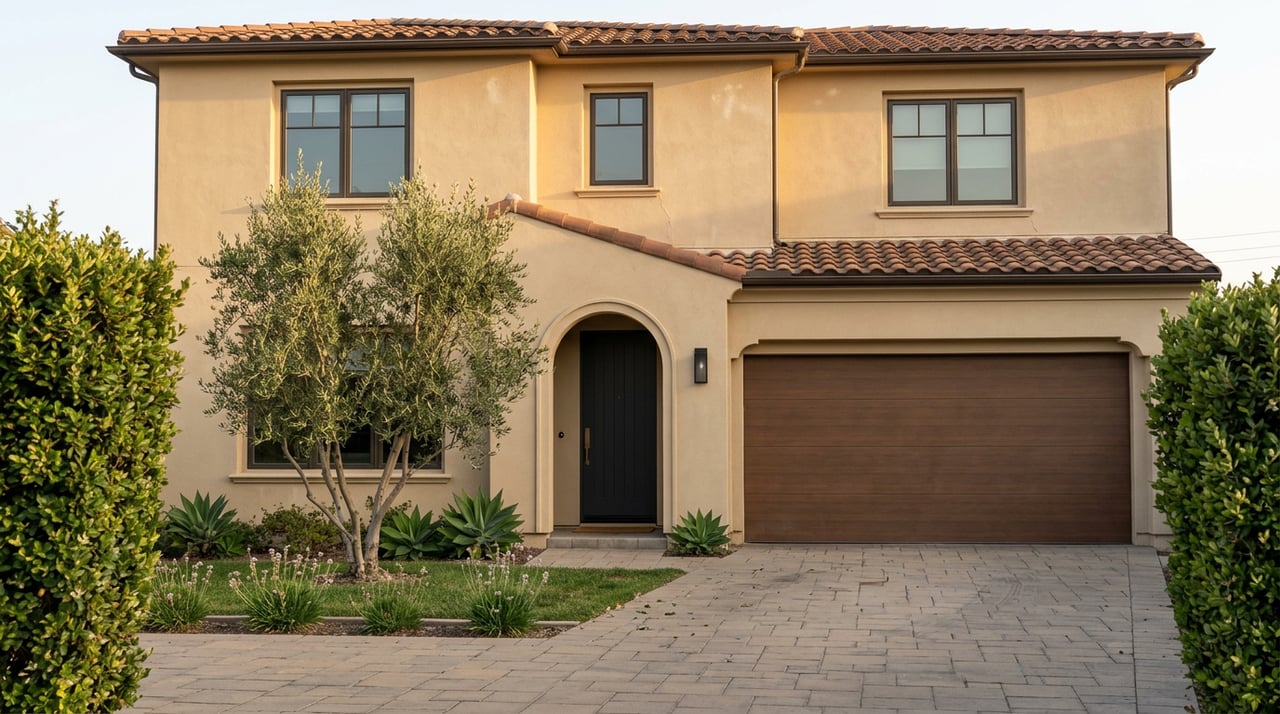
Pacific Highlands Ranch is a different project entirely. Its first homes went up starting in 2004, built by Pardee Homes and other premier custom builders on former farmland once known as Rancho Del Sol. Construction continued there for close to two decades after the original Carmel Valley streets were paved. Both communities now answer to the same "Carmel Valley" label on a listing sheet. Only one of them was built during the era when California cities routinely financed new infrastructure through Mello-Roos special tax districts.
The line that actually separates one Carmel Valley listing from another isn't a school boundary or a canyon. It's a construction start date.
| Original Carmel Valley | Pacific Highlands Ranch | |
|---|---|---|
| Construction began | 1983 | 2004 |
| Housing style | Spanish-inspired tract homes, condos, townhomes | Detached and attached single-family, larger floor plans |
| Representative developments | Cambria at Del Mar Highlands (built 1988), Carmel Valley Ranch, Quail Meadows | Palomar (Toll Brothers), the Sendero Collection (Tri Pointe Homes), Watermark, Casabella |
| Mello-Roos / CFD status | Rare, since roads, schools, and utilities were largely built before districts of this kind became standard practice | Common, tied to bonds issued for the community's more recent infrastructure |
| Elementary districts | Solana Beach (north) and Del Mar Union (south) | Both Del Mar Union and Solana Beach, depending on the specific tract |
| Overlaying high school district | San Dieguito Union | San Dieguito Union |
Notice that the school district overlay doesn't cleanly track the CFD split. Both communities feed into San Dieguito Union for middle and high school, and both have pockets zoned to Del Mar Union or Solana Beach at the elementary level. A buyer who assumes school assignment tells them anything about tax exposure is working from the wrong map entirely.
In March 2026, homes across Carmel Valley sold for a median price of $1.7 million, down 14.1 percent from a year earlier, moving in an average of 22 days. Price per square foot told a different story over that same stretch, up 3.1 percent year over year to $868, which suggests the drop in median price has more to do with which homes happened to sell than with a broad cooling of demand.
Break the same market down by property type and the spread gets wider. Recent listings show condos in the neighborhood averaging around $719,000 while detached single-family homes average roughly $2.3 million. Some of that gap is simple square footage. Some of it is the CFD split. A newer detached home in Pacific Highlands Ranch with an active Mello-Roos assessment and a resale condo in the original Carmel Valley section with none are being priced by two different cost structures, even when the headline number lands close together.
This is the part a median price can never show you. It tells you what the middle of the market did. It says nothing about why two homes that look alike on a spec sheet can carry a different monthly number once escrow closes.
Mello-Roos works differently from your base property tax. Proposition 13 caps that base rate at roughly 1 percent of assessed value with annual increases capped at 2 percent. A Mello-Roos special tax sits on top of that, set by a formula written into the district's original formation documents, and it stays fixed regardless of which direction your home's value moves. It's a fixed obligation attached to the parcel, repaying bonds that financed roads, parks, or schools when the community was built.
Statewide guidance for 2025 and 2026 puts typical Mello-Roos amounts anywhere from a few hundred dollars a year in older, smaller districts to more than $10,000 a year in larger, newer developments. In ZIP codes with heavy CFD coverage, the combined effective property tax rate, base tax plus all local add-ons, can run 1.5 to 1.7 percent of purchase price, compared with 1.1 to 1.3 percent in areas without active districts. On a $1.7 million home, that difference alone is several thousand dollars a year, money that shows up on the tax bill and nowhere on the for-sale sign.
Run the math on a single-family home carrying a $4,800 annual assessment against a comparably priced home with none, and the gap works out to $400 a month, on top of an identical mortgage payment, base tax, and insurance. That's not a rounding error. For a buyer qualifying at the edge of their budget, it's the difference between a loan that clears underwriting and one that doesn't.
None of this shows up by guessing which side of El Camino Real a listing sits on. Here's how to actually confirm it before you're emotionally attached to a house:
Does every home in Pacific Highlands Ranch carry Mello-Roos? Not automatically. CFD boundaries can vary tract by tract even within the same master-planned community, and some lots fall outside a given district's footprint. Confirm the specific parcel rather than assuming coverage based on the neighborhood name alone.
Can a homeowner pay off Mello-Roos early? Sometimes. Whether prepayment is allowed, and what it costs, depends on the CFD's formation documents. Portions tied to bonded debt can often be prepaid; non-bonded special taxes typically cannot. The county's Auditor and Controller can calculate a payoff figure for a fee.
Is Mello-Roos tax deductible? Only in limited circumstances, and the burden falls on the taxpayer to document it. This isn't tax advice, and anyone weighing the deduction question should talk with a CPA who can review the specific CFD documents alongside their return.
How long does a Mello-Roos assessment last? Most run 20 to 40 years from the date the bonds were issued, then end. A district formed in the mid-2000s in Pacific Highlands Ranch still has meaningfully more runway left than one formed in the 1990s elsewhere in North County.
If you're comparing two Carmel Valley listings and the price alone isn't telling you the whole story, Tim & Angie Todd can pull the actual parcel-level tax details before you write an offer, not after. And if this move also means selling a home you already own, their free home valuation tool gives you a real starting number in minutes, so you know both sides of the math before you commit to either one.
Stay up to date on the latest real estate trends.
Get assistance in determining current property value, crafting a competitive offer, writing and negotiating a contract, and much more. Contact us today.