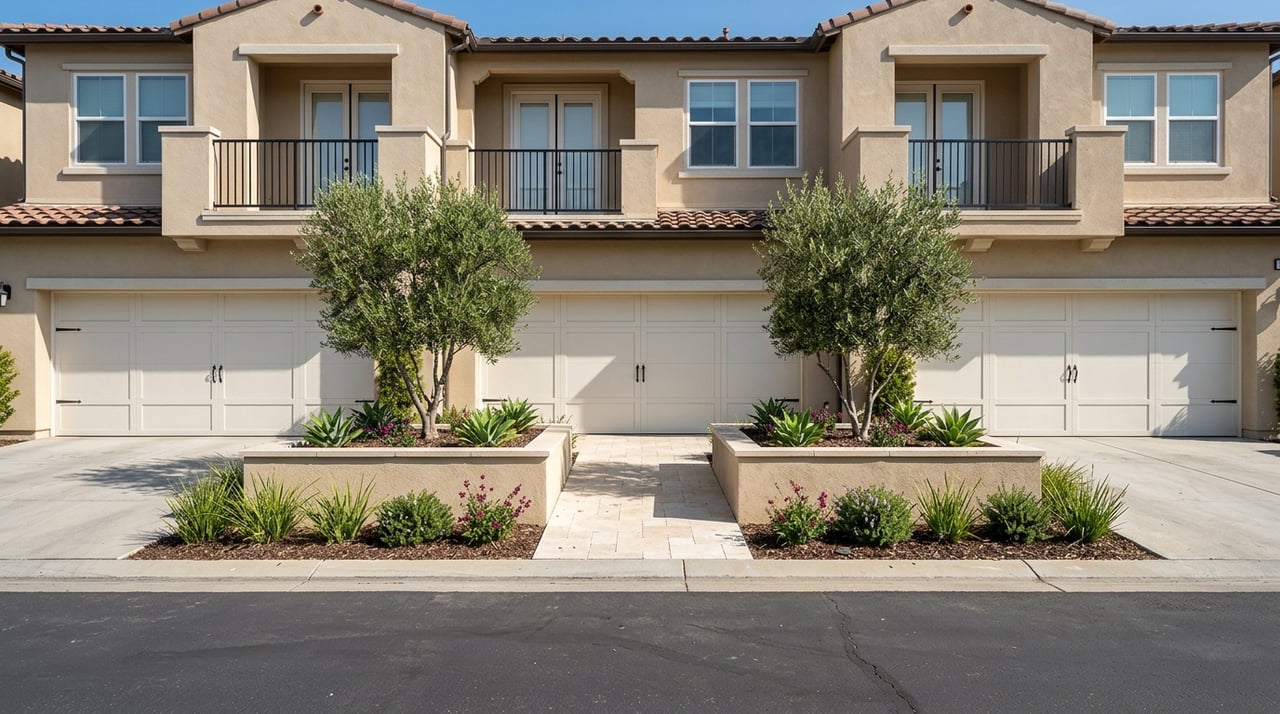
Buying Carmel Valley Condos and Townhomes with Confidence
May 21, 2026
May 21, 2026
If you want Carmel Valley access without the price tag of a detached home, condos and townhomes deserve a serious look. For many buyers, they offer a practical way to get into one of North San Diego’s most recognized communities while keeping maintenance more manageable. The key is knowing what you are really buying, from HOA finances to location trade-offs to monthly carrying costs. Let’s dive in.
Carmel Valley is a planned North San Diego community with parks, a recreation center, open space, hiking and equestrian trails, a library, and a skate park. The City of San Diego also notes that development is concentrated on mesas and around the Del Mar Highlands area rather than in preserved valleys. In practice, that helps explain why many condos and townhomes are clustered near civic, shopping, and daily-use destinations.
For buyers focused on budget, attached homes can open the door to Carmel Valley at a much lower price point than detached homes. In the April 2026 Greater San Diego Association of REALTORS update for 92130, the year-to-date median sales price was $1,150,000 for townhouse-condo homes, compared with $2,575,000 for detached homes. Attached inventory also showed 3.3 months of supply versus 2.2 months for detached homes, which can give buyers a bit more breathing room.
Another draw is location. Carmel Valley has practical access to the coastal corridor, and routes using Carmel Valley Road connect toward Torrey Pines State Beach and Torrey Pines State Preserve. If you want a home base with access to daily conveniences and west-side coastal destinations, attached housing can fit that lifestyle well.
Carmel Valley’s attached housing stock is not one-size-fits-all. Recent public listings show everything from compact one-bedroom condo flats to larger townhouse-style homes with multiple levels and attached garages. That range gives buyers options depending on how much space, privacy, and lock-and-leave convenience you want.
Based on current examples, many attached homes in Carmel Valley fall in the rough range of 800 to 1,600 square feet. Typical layouts run from 1 to 3 bedrooms and 1 to 3 baths. That means you can find options for a first home, a relocation purchase, a smaller-footprint move, or a more spacious townhome that lives closer to a detached house.
The housing stock is also mixed by age. Current examples include condos and townhomes built in the late 1980s as well as homes from the early 2000s. That variety can be appealing, but it also means buyers should pay close attention to building condition, reserve planning, and upcoming capital projects.
Many communities offer shared amenities that help make up for less private outdoor space. Depending on the complex, you may see features such as:
Monthly HOA dues vary, and what they cover can vary just as much. Current listing examples show dues in the mid-$300s to low-$500s per month, with some communities covering items like water, trash, pest control, or other services. That is why the dues number alone does not tell the full story.
A condo often works best if you want simplicity and are comfortable with a smaller footprint. You may get strong amenity access and lower exterior maintenance, but you may also have shared walls, less storage, and less control over exterior elements. For buyers who travel often or want a more streamlined lifestyle, that trade-off can be worth it.
A townhome may be a better fit if you want more separation, more square footage, or direct garage access. Some townhomes live more like a detached home while still offering HOA-managed exterior maintenance and shared community features. If you work from home, need extra bedrooms, or want a little more privacy, this option may feel more comfortable.
One of the biggest reasons buyers choose attached housing is convenience. In Carmel Valley, some current listings highlight close access to the recreation center, library, beaches, and other everyday destinations. For relocating professionals or busy households, that can be a major plus.
At the same time, buying into a common-interest development means you are agreeing to shared rules and shared costs. Compared with detached homes, condos and townhomes usually mean less yard work and less exterior upkeep, but also less freedom over certain exterior changes and common-area use. Parking, storage, noise transfer, and guest access can also vary by community.
The right question is not whether condos and townhomes are better or worse than detached homes. It is whether the specific community matches how you want to live day to day. That is where careful review matters most.
If school assignment is part of your home search, do not assume the ZIP code tells the whole story. The City of San Diego community page lists schools across Del Mar Union School District, Solana Beach School District, and San Dieguito Union High School District. District information also shows that school assignment can be address-specific, and some addresses may fall into option areas.
That means you should verify the exact property address during your search. A home that looks close to one campus may still have a different assigned path based on district boundaries. This step is especially important when you are comparing similar condos or townhomes in different parts of Carmel Valley.
In Carmel Valley, HOA review is not a side issue. It is a central part of buying a condo or townhome. California’s framework for common-interest developments makes clear that HOAs typically charge fees and assessments and are governed by CC&Rs, bylaws, and rules.
The California Department of Real Estate says buyers should know whether the property is in a common-interest development, whether there is an HOA, whether monthly assessments and reserves apply, whether the home is subject to CC&Rs or a special assessment district, and the name of the school district. For attached homes, those details can affect both your monthly budget and your day-to-day ownership experience.
California Civil Code Section 5300 requires an annual budget report with important financial and operational details. California Civil Code Section 5550 requires a visual reserve study at least once every three years, plus annual review. Those requirements make the disclosure package especially valuable for buyers.
As you review the HOA package, focus on these items:
A healthy-looking complex on the surface is not enough. You also want to know whether the HOA is planning ahead for roofs, painting, paving, drainage, and other major components that can affect future costs.
A smart condo or townhome purchase usually comes down to asking the right questions early. That helps you compare communities more accurately and avoid surprises after closing. It also gives you a clearer picture of total ownership cost, not just the purchase price.
Start with these:
That last point matters because those extra costs can change your true monthly payment. In a market like Carmel Valley, where attached homes already sit at a premium compared with many other San Diego areas, every recurring cost should be part of your budget review.
The best Carmel Valley condo or townhome is not always the one with the newest finishes or the lowest HOA dues. It is the one that fits your budget, location goals, and lifestyle, while also checking out on paper. A well-located home with solid HOA finances and clear ownership costs can be a strong long-term choice.
This is where local guidance helps. Carmel Valley has a wide spread in product type, community setup, and monthly cost structure, so comparing one attached home to another is rarely apples to apples. When you understand the numbers, the documents, and the neighborhood context, you can move forward with much more clarity.
If you are weighing condos, townhomes, or a detached home in Carmel Valley, having a local strategy can make the search a lot easier. Connect with Tim & Angie Todd for personalized guidance on Carmel Valley neighborhoods, attached-home options, and what to look for before you write an offer.
Stay up to date on the latest real estate trends.

Get assistance in determining current property value, crafting a competitive offer, writing and negotiating a contract, and much more. Contact us today.